




 108 / 218

C
D
1
2
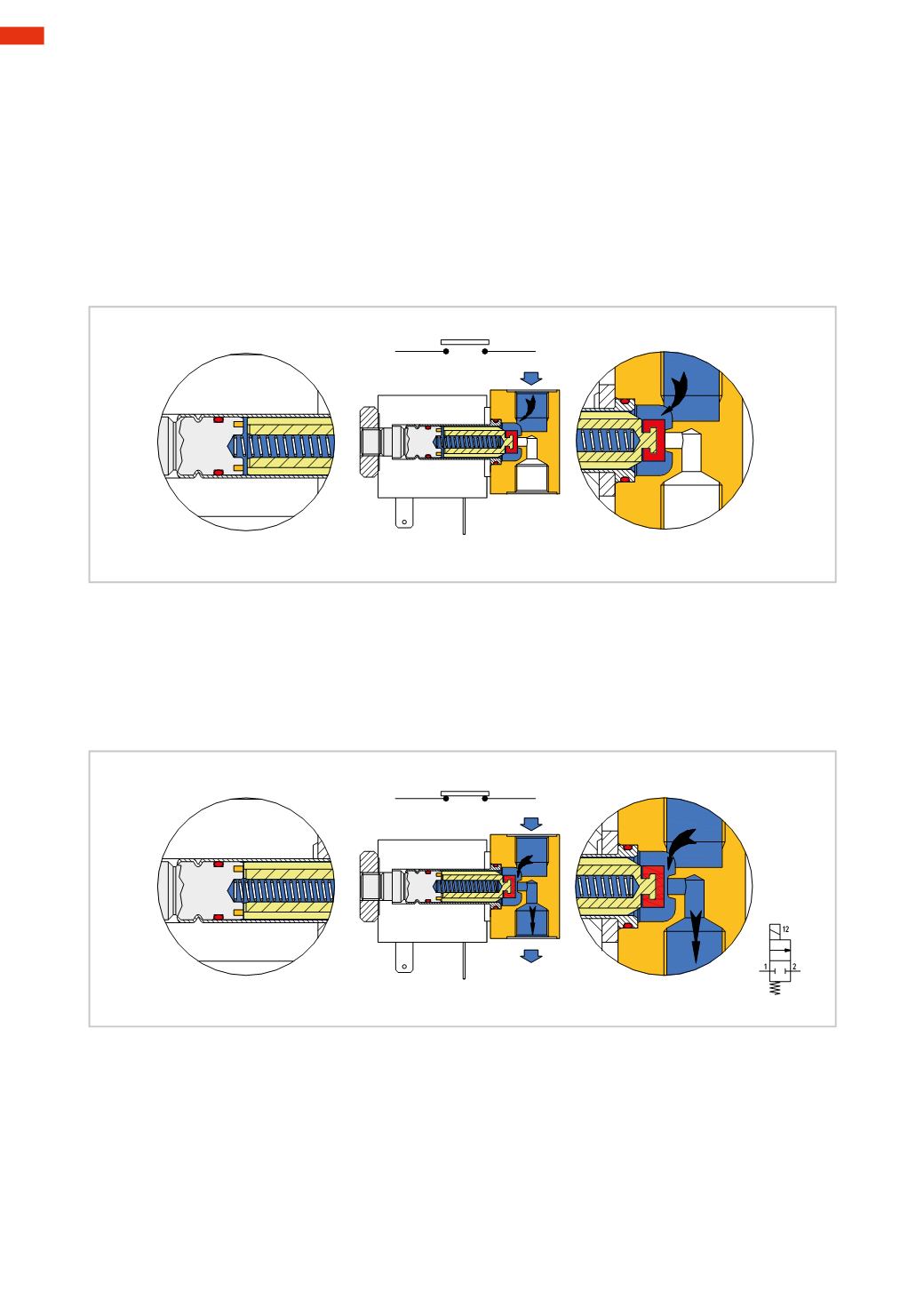
Fig. 31
2/2-way NC solenoid valve
(2-way, 2-position, normally closed)
Figure 30
Rest position, electrical contact open, absence of electrical energy.
Pos. A
: the incoming compressed air does not act on all the surfaces of the mobile plunger, but only on the inner
part of the orifice where the plunger closes the passage towards the outlet 2. The thrust of the air favors closing,
in preference to opening. By limiting the maximum working pressure one can increase the diameter of passage
towards outlet 2 while keeping the same solenoid. With this solution there are no anomalies even in the presence
of strong pressure oscillations, as in the case of bursts of air.
Pos. B
: the force exerted on the mobile plunger is greater on the spring side as apart from the force of the spring,
the forces on the surfaces of the upper and lower end of the plunger affected by the pressure are different.
The presence of pressure to outlet 2 favors the elevation of the mobile plunger, in the absence of pressure, greater
power for the actuation is required.
1
2
A
B
Fig. 30
Figure 31
The electrical contact is closed, there is passage of electrical energy, and voltage is supplied to the solenoid.
Pos. C
: a current flows through the solenoid generating a magnetic field, which pulls the mobile plunger upwards.
The internal conical spring compresses and the seal is detached from the orifice. It opens the passage of C/A from
inlet 1 outlet 2.
Pos. D
: the surface of the upper section of the mobile plunger is in contact with the lower surface of the fixed
plunger.
4
106
CAMOZZI
>
VALVES