




 72 / 218

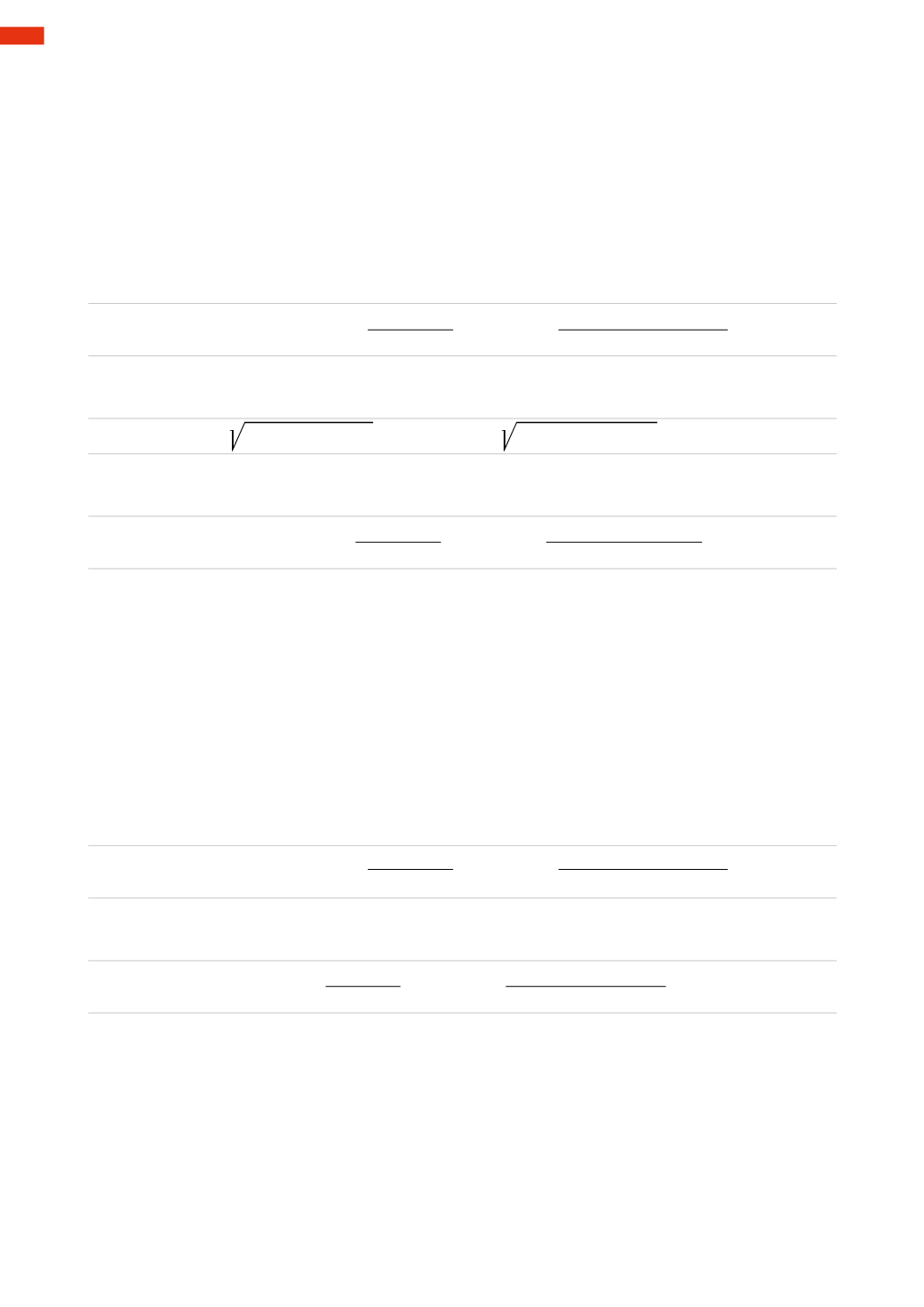
Figure 20
Pos. 3
: the resistance
R
is located between the fulcrum
fc
and the power
P
(second type of lever).
Value of the load
R
= 12
Kg
(120
N
)
The arm
b
p
= 1000
mm
Distance of the fulcrum from the point of application of resistance
fcR
= 660
mm
Distance of the fulcrum from the point of application of power
fcP
=1100
mm
State of equilibrium
RR
1
,
is possiblewith a displacement of 550
mm
.
Calculation of the cylinder stroke, using the similarity of the triangles
fcPP
1
and
fcRR
1
:
fcP
:
fcR
=
PP
1
:
RR
1
PP
1
=
fcP
1
*
RR
1
PP
1
=
1100
[mm]
*
550
[m]
=
916
mm
fcR
660
[mm]
Calculation of the resisting arm
�
fcR
�
2
–
�
½
RR
1
�
2
b
r
=
�
660
�
2
–
�
½ * 550
�
2
≅
600
mm
b
r
=
For the equilibrium of moments we know that:
b
p
* F
=
b
r
* R
F
=
b
r
*
R
F
=
600
[mm]
*
12
[N]
=
72
N
b
p
1000
[mm]
The Force
F
needed to place the system in equilibrium is 72
N
.
Figure 20
Pos. 4
: the power
P
is located between the fulcrum
fc
and the resistance
R
(lever of the third type).
Value of the load
R
= 12
Kg
(120
N
)
The arm
b
p
= 400
mm
The arm
fcR
=1000
mm
State of equilibrium should be possiblewith a displacement of 550
mm
(
RR
1
)
Calculation of the cylinder stroke, using the similarity of the triangles and
fcPP
1
and
fcRR
1
:
b
p
:
b
r
=
PP
1
:
RR
1
PP
1
=
b
p
*
RR
1
PP
1
=
400
[mm]
*
550
[m]
=
220
mm
b
r
1000
[mm]
Calculating the cylinder force, for the equilibrium of moments we have
F * b
p
=
b
r
* R
F
=
b
r
*
R
F
=
1000
[mm]
*
12
[Kg]
=30
Kg
≅
300
N
b
p
400
[mm]
The Force
F
required to equilibrate the system is 300
N
.
Ideally, for a correct cylinder sizing, the cylinder should create a force that is at least 25%more than the value
of the load.
3
70
CAMOZZI
>
CYLINDERS