




 74 / 218

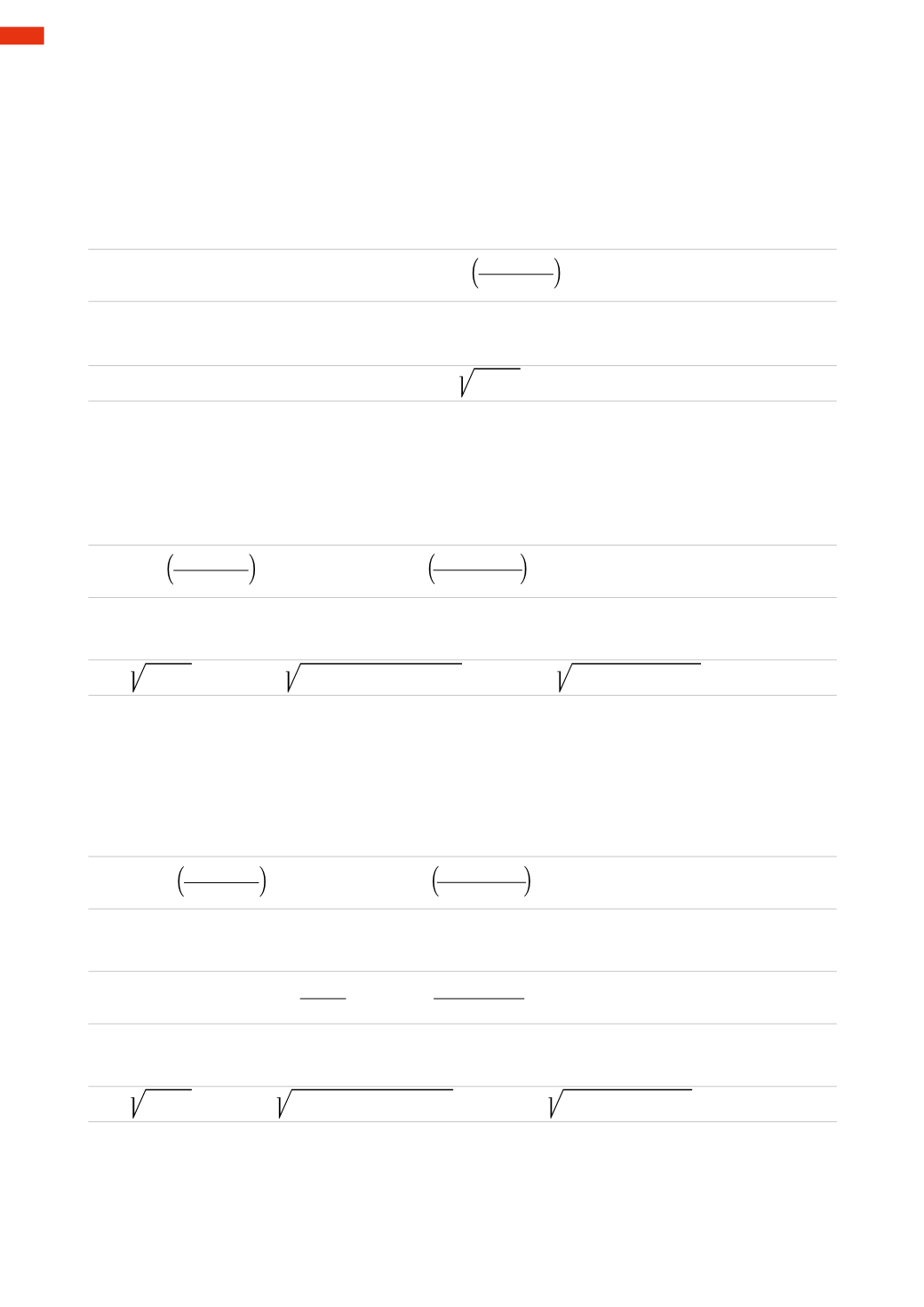
Figure 22
Pos. 3
: the arm is reduced and consequently the torque is smaller.
To determine the stroke of the cylinder relative to
β
we need:
the angle
β
length of the crank
r
value of
h
With this datawe obtain the length of the arm
b
=
r
* sin
180° –
β
2
Fromwhich the stroke
C
:
r
2
–
b
2
C
=2
Example of the calculation of the stroke
C
of a cylinder
Length of the crank
r
= 500
mm
Angle
β
= 90°
Calculating the length of the arm
b
:
b
=
r
* sin
180° –
β
2
b
=
500
[mm] * sin
180° – 90°
2
b
=500
[mm] * sin
45°
b
=
353
mm
Calculation of the stroke
C
r
2
–
b
2
C
=2
500
2
[mm]
– 353
2
[mm]
C
=2
250000 – 124609
C
=2
C
=
708
mm
Figure 22
Pos. 4
: impact of the variation of the angle on the stroke and the cylinder diameter assuming the torque is 100
Nm
.
Length of the crank
r
= 450
mm
The angle
α
=90°
Calculate the length of the arm
b
1
:
b
1
=
r
* sin
180° –
β
2
b
1
=450
[mm] * sin
180° – 90°
2
b
1
=450
[mm] * sin
45°
b
1
=
318
mm
In this position, in order to have 100
Nm
of torquewewill need a cylinder that develops a Force:
F
s
=
M
t
F
s
=
100
[Nm]
F
s
=
314
N
b
1
0,318
[m]
the necessary stroke length of the cylinder will be:
r
2
–
b
2
C
=2
450
2
[mm]
– 318
2
[mm]
C
= 2
202500 – 101124
C
=2
C
=
636
mm
3
72
CAMOZZI
>
CYLINDERS